
Introduction
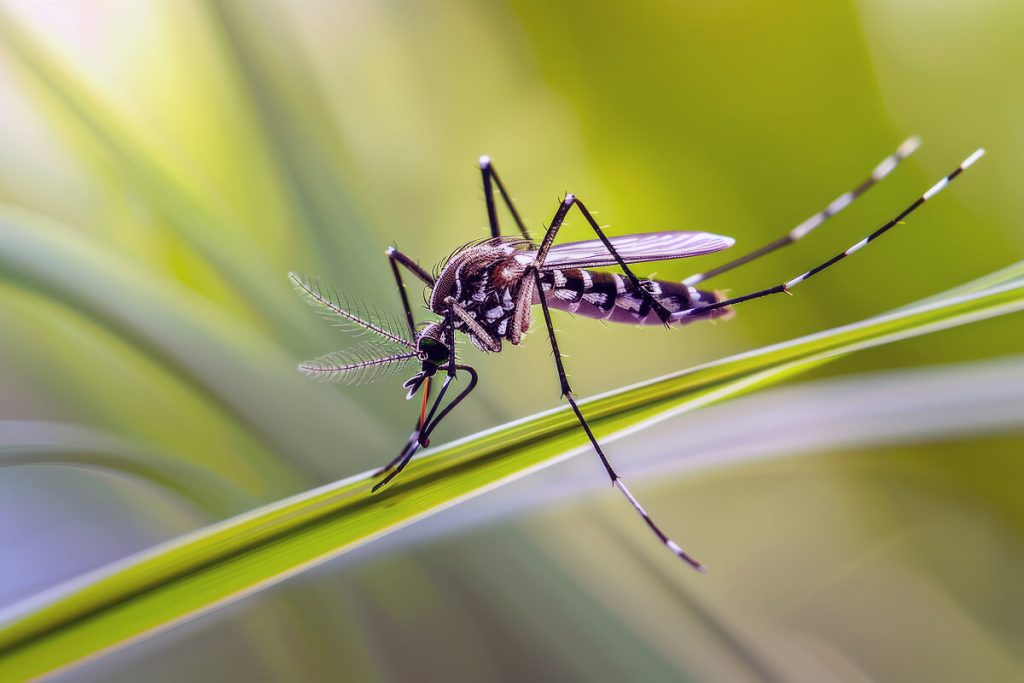
Mosquitoes are among the most dangerous public health pests in the world. Although small in size, they are responsible for transmitting serious diseases that affect millions of people every year. In Pakistan, mosquitoes are a major concern during the warmer months and after seasonal rains, when standing water creates ideal breeding conditions.
Only female mosquitoes bite humans and animals because they require a blood meal to produce eggs. During feeding, infected mosquitoes can transmit disease-causing parasites and viruses, making effective mosquito control essential for protecting public health.
What Do Mosquitoes Look Like?
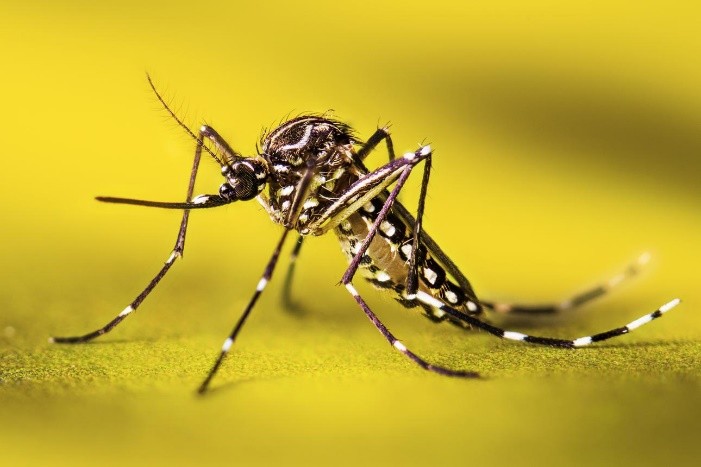
Mosquitoes are small, slender insects belonging to the fly family (Culicidae).
Adult mosquitoes typically have:
- Long, thin legs
- A narrow body
- One pair of transparent wings
- Long antennae
- A needle-like mouthpart (proboscis) used for feeding
Both male and female mosquitoes feed on plant nectar. However, only females bite humans and animals to obtain the protein required for egg production.
The most important mosquito groups in Pakistan include:
Aedes Mosquito
- Black body with distinctive white markings
- Active during the daytime
- Primary vector of Dengue, Chikungunya, and Zika virus
Anopheles Mosquito
- Rests with its body angled upward
- Mostly active from dusk to dawn
- Primary vector of Malaria
Culex Mosquito
- Brown to gray in color
- Active during the evening and night
- Can transmit West Nile virus and other mosquito-borne diseases
Where Do Mosquitoes Live?
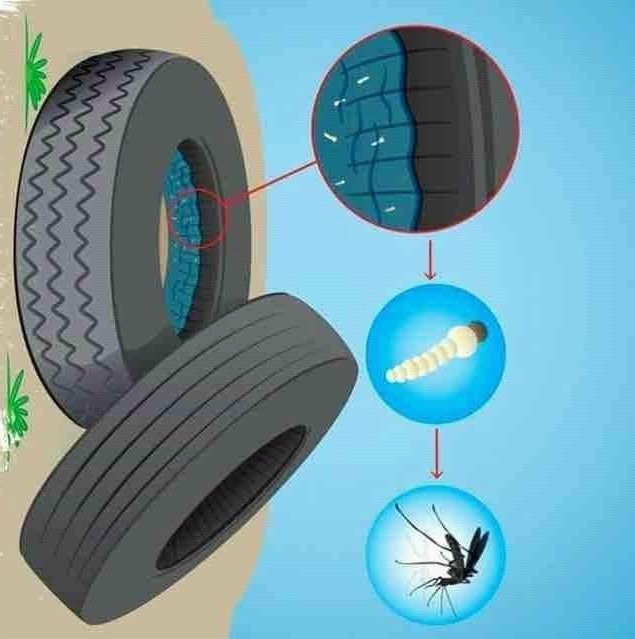
Mosquitoes are highly adaptable and can survive in a wide range of environments. They breed in or near standing water, where their eggs, larvae, and pupae develop.
Common breeding sites include:
- Water storage containers
- Buckets
- Flower pots
- Old tyres
- Roof gutters
- Drains
- Construction sites
- Bird baths
- Ponds
- Sewage channels
- Blocked drains
- Rainwater collections
- Discarded containers
Even a small amount of stagnant water can support mosquito breeding.
Adult mosquitoes usually rest in:
- Dense vegetation
- Bushes
- Tall grass
- Dark corners
- Under furniture
- Basements
- Garages
- Shaded outdoor areas
Why Are Mosquitoes Dangerous?
Mosquitoes are considered one of the deadliest animals because they transmit diseases through their bites.
According to the World Health Organization (WHO), mosquito-borne diseases affect hundreds of millions of people worldwide each year.
Mosquitoes are responsible for transmitting diseases such as:
- Malaria
- Dengue Fever
- Chikungunya
- Yellow Fever
- Zika Virus
- West Nile Virus
- Japanese Encephalitis
- Lymphatic Filariasis
In addition to disease transmission, mosquito bites can cause:
- Skin irritation
- Allergic reactions
- Itching
- Swelling
- Sleep disturbance
- Reduced outdoor comfort
For businesses such as hotels, restaurants, parks, and recreational facilities, mosquito infestations can also negatively affect customer satisfaction and employee productivity.
Mosquito Life Cycle
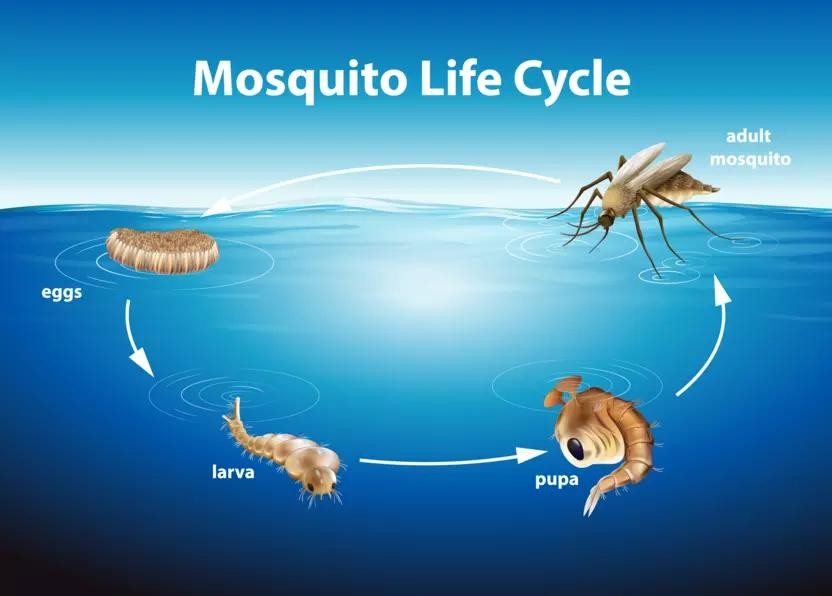
Mosquitoes undergo complete metamorphosis consisting of four stages.
Egg
Female mosquitoes lay eggs on or near standing water. Depending on the species, eggs may hatch within a few days.
Larva
Larvae, commonly called “wigglers,” live in water and feed on microorganisms and organic matter while breathing at the water surface.
Pupa
The pupal stage is a resting phase during which the mosquito transforms into an adult.
Adult
Adult mosquitoes emerge from the water surface and begin feeding. Males feed on nectar, while females require blood meals before laying eggs.
Under favorable conditions, the complete life cycle can be completed in as little as 7–14 days.
How to Prevent Mosquito Infestations
Successful mosquito management focuses on eliminating breeding sites and reducing adult mosquito populations.
Eliminate Standing Water
- Empty containers that collect rainwater
- Clean roof gutters regularly
- Repair leaking taps and pipes
- Drain unused pools
- Refresh bird baths and pet water bowls frequently
- Dispose of old tyres and unused containers
Maintain Outdoor Areas
- Trim bushes and overgrown vegetation
- Keep lawns mowed
- Improve drainage around buildings
- Remove unnecessary outdoor clutter
Personal Protection
- Wear long-sleeved clothing outdoors
- Use mosquito repellents on exposed skin
- Install window and door screens
- Sleep under mosquito nets where appropriate
- Avoid outdoor exposure during peak mosquito activity
Encourage Natural Predators
Natural mosquito predators include:
- Dragonflies
- Fish
- Frogs
- Birds
- Bats
These species help reduce mosquito populations naturally in suitable environments.
Professional Mosquito Control
At FLORA Services, we provide comprehensive mosquito management programs using Integrated Pest Management (IPM) principles.
Our mosquito control services include:
- Site inspection and risk assessment
- Breeding site identification
- Larval control (Larviciding)
- Thermal fogging
- ULV fogging
- Residual spraying
- Drain treatments
- Outdoor vegetation treatment
- Monitoring and follow-up inspections
- Seasonal mosquito management programs
Our integrated approach targets both larvae and adult mosquitoes, helping to reduce mosquito populations effectively while minimizing environmental impact.
Frequently Asked Questions
Do all mosquitoes bite humans?
No. Only female mosquitoes bite because they need a blood meal to produce eggs.
Where do mosquitoes breed?
Mosquitoes breed in stagnant or slow-moving water, including buckets, flower pots, roof gutters, tyres, drains, and water storage containers.
Can mosquitoes spread diseases in Pakistan?
Yes. Mosquitoes in Pakistan are known to transmit diseases such as dengue fever and malaria.
What is the best way to prevent mosquitoes?
Eliminating standing water, maintaining good sanitation, and using professional mosquito management programs are the most effective preventive measures.
When is mosquito activity highest?
Activity varies by species. Most mosquitoes are active during dawn and dusk, while Aedes mosquitoes, which spread dengue, are active during the daytime.
Why Choose FLORA Services?
FLORA Services provides professional mosquito management solutions for residential communities, commercial properties, hospitals, educational institutions, industrial facilities, parks, and government organizations across Pakistan. Our trained technicians use Integrated Pest Management (IPM) strategies, including larval source management, thermal fogging, residual spraying, and routine monitoring, to deliver effective and sustainable mosquito control.
We focus on reducing breeding sites, controlling adult mosquito populations, and helping protect communities from mosquito-borne diseases.
Contact FLORA Services
Protect your family, employees, and visitors from mosquito-borne diseases with professional mosquito control solutions.
📞 24/7 Customer Support: 0345-9994222
Book a professional mosquito inspection today and let FLORA Services help you maintain a healthier, mosquito-free environment.